Mewtwo Lv.54 is one of the most interesting vintage Japanese Pokémon cards for collectors who focus on the early Japanese releases.
The reason is simple: the same Atsuko Nishida artwork was used for two different 1998 Japanese releases — the Expansion Sheet 1 vending-machine version and the Quick Starter Gift version.
Although the artwork, HP, Level, and Pokémon are the same, these are different printings with different card surfaces and different rarity markings.
The Expansion Sheet version has the characteristic glossy finish associated with the Japanese Vending Machine Series and includes a rarity symbol. The Quick Starter Gift version was printed on matte card stock and does not have a rarity symbol.
This difference is extremely important when buying the card, especially because sellers and marketplaces sometimes simply describe both versions as “Japanese Mewtwo Lv.54.”
In this guide, we will compare the two versions, explain where each came from, show how to identify them, discuss current market values, PSA grading, and explain why this Mewtwo is such an interesting vintage Japanese collectible.
Card Information
- Card: Mewtwo Lv.54
- Japanese Name: ミュウツー
- HP: 80
- Type: Psychic
- Illustrator: Atsuko Nishida
- Original Release: 1998
- Expansion Sheet Version: Expansion Sheet 1 — Blue Sheet
- Quick Starter Version: Quick Starter Gift — Green Deck
- Card Number: No.150

Why Are There Two Mewtwo Lv.54 Cards?
The Mewtwo Lv.54 featured in this guide was first released as part of Expansion Sheet 1, one of the Japanese Vending Machine Series releases.
These cards were distributed through Pokémon card vending machines in Japan rather than conventional booster packs.
The Expansion Sheet series has become a major collecting category among international vintage Pokémon collectors and is commonly referred to as the Japanese Vending Series.
Mewtwo is found on the Blue Sheet version of Expansion Sheet 1.
Later in 1998, the same Mewtwo artwork was reprinted in the Quick Starter Gift Set.
This creates a particularly interesting situation for collectors: the artwork is essentially the same, but the physical printing is different.
The two versions should therefore be treated as separate collectibles.
Expansion Sheet Mewtwo
The first version comes from Expansion Sheet 1 — Blue Sheet.
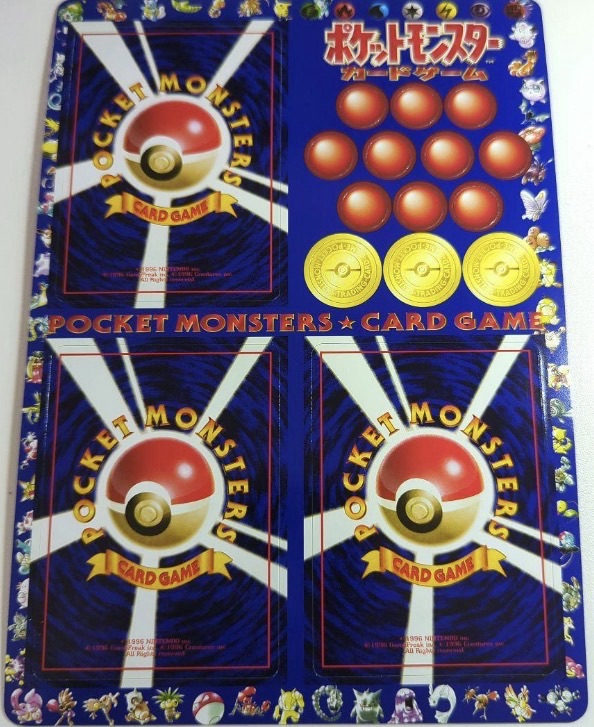
The Expansion Sheet cards were sold through vending machines in Japan in 1998. Unlike standard Japanese Pokémon cards, these cards were printed with a distinctive glossy surface.
The Mewtwo is Lv.54 with 80 HP and features artwork by Atsuko Nishida.
Another important identification feature is the ◆ rarity symbol.
The glossy finish and rarity symbol are two of the easiest ways to distinguish the Expansion Sheet version from the later Quick Starter Gift reprint.
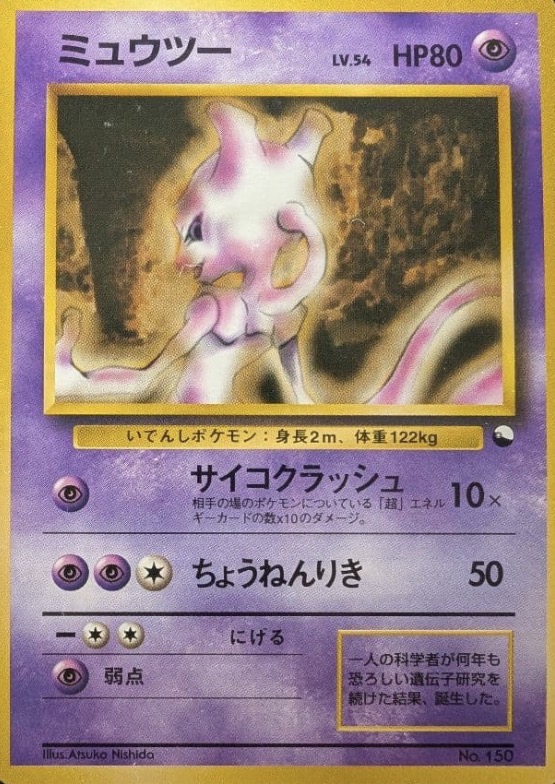
Quick Starter Gift Mewtwo
The second version was included in the Japanese-exclusive Quick Starter Gift.
The product was released on December 4, 1998 and contained two preconstructed decks: a Red Deck and a Green Deck.
Mewtwo Lv.54 was included in the Green Deck.
The important detail is that many cards in the Quick Starter Gift were reprints of cards from the Vending Machine Series.
However, these were not identical physical prints.
The Quick Starter version was printed on matte card stock instead of the glossy stock used for the Vending Machine version.
It also does not have the rarity symbol.
Because of these differences, the Quick Starter Mewtwo is considered a separate version by collectors even though the artwork is the same.
Expansion Sheet vs. Quick Starter Gift
| Feature | Expansion Sheet | Quick Starter Gift |
|---|---|---|
| Product | Expansion Sheet 1 | Quick Starter Gift |
| Sheet / Deck | Blue Sheet | Green Deck |
| Surface | Glossy | Matte |
| Rarity Symbol | ◆ Yes | None |
| Illustrator | Atsuko Nishida | Atsuko Nishida |
| Level | 54 | 54 |
| HP | 80 | 80 |
The easiest way to remember the difference is:
Expansion Sheet = Glossy + ◆
Quick Starter Gift = Matte + No rarity symbol
If you are buying a raw copy, never rely only on the seller’s title. Always inspect the actual card surface and the area around the card number and rarity symbol.
What Was the Quick Starter Gift?
The Quick Starter Gift was a Japanese-exclusive starter product designed to make it easier for new players to begin playing the Pokémon TCG.
It contained two ready-to-play decks, the Red Deck and Green Deck, along with accessories and other materials.
The product was different from a normal booster pack because the buyer received a complete playable deck rather than a random selection of cards.
For collectors, one of the most important aspects of the product is its relationship with the Vending Machine Series.
Many of the cards were reprints of Vending Machine cards, but the Quick Starter versions were printed with different physical characteristics.
That means the Quick Starter Gift effectively created a second version of several familiar Vending Series cards.
This is one reason collectors who build complete Japanese vintage collections often want both versions.
The Quick Starter Set is explained in detail here 👇
→ View Detail pf quick starer
Why the Two Versions Are Easy to Confuse
The biggest problem is that the artwork is the same.
A collector unfamiliar with Japanese vintage cards may see the Mewtwo artwork and assume there is only one version.
In reality, the printing history is more complicated.
The Expansion Sheet version and Quick Starter Gift version share:
- Mewtwo
- Lv.54
- 80 HP
- Atsuko Nishida artwork
- 1998-era Japanese design
But they differ in:
- Card surface
- Rarity symbol
- Original product
- Distribution method
- Collector classification
This is why this Mewtwo is an excellent example of how vintage Japanese Pokémon cards can have multiple print variations that are not immediately obvious from the artwork.
Current Price Guide
Prices vary depending on the version and condition. The following figures are useful market references rather than fixed values.
| Version | Condition | Reference |
|---|---|---|
| Expansion Sheet | Near Mint | ≈ $90–100 |
| Expansion Sheet | PSA 10 | ≈ $500+ |
| Quick Starter Gift | Near Mint | ≈ $400–500 |
Based on the site’s latest research, the Expansion Sheet Mewtwo has recently been around ¥14,500 for a raw copy, while a PSA 10 has been estimated at approximately ¥81,840.
The Quick Starter version can command a considerably higher raw price, with recent Japanese market references around ¥70,000 for a Near Mint copy.
Affiliate Disclosure: As an eBay Partner Network affiliate, I may earn a commission from qualifying purchases at no additional cost to you.
These figures should be treated as reference points only. Vintage Japanese Pokémon prices can change significantly depending on condition, timing, seller, and whether the exact printing is correctly identified.
Why Is the Quick Starter Version So Interesting?
At first glance, it may seem strange that the Quick Starter version can be more expensive than the Vending Machine version.
The reason is that collectors are not simply buying the artwork.
The Quick Starter Gift version has its own history and is much less commonly encountered by collectors who are searching specifically for Vending Series cards.
Its matte surface and lack of a rarity symbol make it immediately distinguishable once you know what to look for.
For collectors trying to document every printing of early Japanese Pokémon cards, this distinction is extremely important.
PSA 10 Value
High-grade copies of both versions are attractive to collectors, but the PSA market should be evaluated separately for each printing.
A PSA 10 Expansion Sheet Mewtwo is not automatically equivalent to a PSA 10 Quick Starter Mewtwo.
The cards may share the same artwork, but they are different printings.
This is particularly important when searching eBay, where sellers may use simplified titles such as “Mewtwo Vending”, “Mewtwo Quick Starter”, or simply “Mewtwo Lv.54”.
Always check the photographs and confirm the surface and rarity symbol before comparing prices.
What Makes the Expansion Sheet Version Special?
The Expansion Sheet version belongs to one of the most recognizable categories of early Japanese Pokémon cards.
The Vending Machine Series was distributed through vending machines in Japan and used glossy card stock that immediately separates it from most standard Japanese releases.
International collectors commonly refer to these cards as Japanese Vending Series.
For many collectors, the Vending Series represents one of the defining eras of vintage Japanese Pokémon collecting.
Mewtwo is also one of the most popular Pokémon in the entire franchise, making the combination particularly strong:
- 1998 Japanese Vending Series
- Mewtwo
- Atsuko Nishida artwork
- Glossy card stock
- ◆ rarity symbol
This gives the Expansion Sheet Mewtwo a strong identity beyond simply being an old Mewtwo card.
What Makes the Quick Starter Version Special?
The Quick Starter version is interesting for a different reason.
It represents the intersection between the Vending Machine Series and a Japanese starter product.
The card effectively preserves the same artwork while changing the physical printing.
For collectors who want to understand the printing history of early Japanese Pokémon cards, this is an important distinction.
The matte finish and missing rarity symbol are not defects. They are intentional characteristics of the Quick Starter Gift printing.
How to Identify the Expansion Sheet Version
If you are looking at a raw Mewtwo Lv.54, check the following:
- Glossy surface
- ◆ rarity symbol
- Expansion Sheet 1 / Blue Sheet origin
- Mewtwo Lv.54
- 80 HP
- Atsuko Nishida artwork
If the card has a matte finish and no rarity symbol, it is not the standard Expansion Sheet printing.
How to Identify the Quick Starter Version
The Quick Starter Gift version has the opposite characteristics:
- Matte surface
- No rarity symbol
- Included in the Green Deck
- Mewtwo Lv.54
- 80 HP
- Atsuko Nishida artwork
This makes the surface and rarity symbol the two most useful identification tools.
Where to Buy Mewtwo Lv.54
eBay is one of the easiest places for international collectors to search for both versions.
Because sellers use different terminology, it is worth searching for both the Vending Machine version and the Quick Starter version separately.
Useful search terms include:
- Mewtwo Lv.54 Vending
- Mewtwo 150 Vending Japanese
- Mewtwo Expansion Sheet Japanese
- Mewtwo Quick Starter Gift
- Mewtwo No.150 Quick Starter
- Japanese Mewtwo Lv.54
Check eBay Sold Prices
When comparing vintage Pokémon cards, asking prices can be misleading.
A seller may list a Mewtwo for several hundred dollars, but that does not mean buyers are actually paying that amount.
For this reason, collectors should compare completed and sold listings whenever possible.
This is particularly important for the Quick Starter version because the market is much thinner than for modern Pokémon cards.
Buying Tips for Collectors
Before buying this Mewtwo, the most important thing is to identify the exact printing.
- Check whether the surface is glossy or matte.
- Check for the ◆ rarity symbol.
- Confirm that the card is Lv.54 / HP80.
- Confirm the artwork is by Atsuko Nishida.
- Ask the seller for close-up photographs if the surface is unclear.
- Inspect the four corners for whitening.
- Check the front and back for scratches and dents.
- For PSA copies, verify the label and certification number.
- Do not compare a Quick Starter copy directly with a Vending copy without confirming the printing.
The last point is especially important.
Two Mewtwo cards can look almost identical in a listing photograph but have very different market values because they come from different products.
Is There an English Version?
The Mewtwo discussed in this article is a Japanese-exclusive release.
There is no direct English version of this particular Expansion Sheet / Quick Starter Gift printing.
That makes it especially interesting for collectors building a Japanese-exclusive vintage collection.
International collectors generally have to purchase the original Japanese cards rather than looking for an English equivalent.
Why Mewtwo Is a Strong Vintage Collecting Target
Mewtwo has remained one of the most recognizable Pokémon since the earliest years of the franchise.
That popularity is particularly important when collecting vintage cards.
Even among obscure Japanese releases, Pokémon such as Mewtwo tend to attract collectors from multiple collecting categories.
This Mewtwo combines:
- One of the most popular Pokémon
- 1998 Japanese vintage history
- Japanese Vending Machine Series collecting
- Atsuko Nishida artwork
- Two distinct printings
- Strong international collector interest
That combination gives the card long-term appeal beyond its original role in the Pokémon TCG.
Frequently Asked Questions
Are the Expansion Sheet and Quick Starter Mewtwo the same card?
They share the same Mewtwo artwork, Level, HP, and illustrator, but they are different printings from different products.
How can I tell the two versions apart?
The Expansion Sheet version has a glossy surface and a ◆ rarity symbol. The Quick Starter Gift version has a matte surface and no rarity symbol.
Which deck contains the Quick Starter Mewtwo?
Mewtwo Lv.54 was included in the Green Deck of the Japanese Quick Starter Gift.
Who illustrated Mewtwo Lv.54?
The artwork was created by Atsuko Nishida.
When was Mewtwo Lv.54 released?
The Expansion Sheet version was released in 1998, while the Quick Starter Gift version was included in the Quick Starter Gift released on December 4, 1998.
Is the Quick Starter Mewtwo rare?
It is a much less commonly encountered printing than many standard vintage Pokémon cards, and its matte finish and lack of a rarity symbol make it a distinct target for advanced Japanese collectors.
Is there an English version?
No direct English version of this particular Japanese printing was released.
Where can I buy one?
eBay is one of the most convenient international marketplaces for searching for both versions. Japanese marketplaces and specialist card shops can also have copies, but availability varies significantly.
Related Guides
- Quick Starter Gift Set Guide & Valuable Cards
- Top 20 Valuable Japanese Pikachu Cards
- Oyama’s Pikachu Guide
- Masaki Alakazam Guide
Final Thoughts
Mewtwo Lv.54 is a perfect example of why vintage Japanese Pokémon collecting can be much more complicated than simply identifying the artwork.
The Expansion Sheet and Quick Starter Gift versions look almost identical, but their different printing characteristics make them separate collectibles.
The easiest way to remember the distinction is simple:
Expansion Sheet = glossy surface + ◆ rarity symbol.
Quick Starter Gift = matte surface + no rarity symbol.
For collectors interested in the Japanese Vending Machine Series, the Expansion Sheet version is an important Mewtwo. For collectors building a complete printing collection, the Quick Starter Gift version is equally interesting because it represents a distinct reprint from the 1998 starter product.
With Mewtwo’s enduring popularity and Atsuko Nishida’s artwork, both versions remain compelling targets for vintage Japanese Pokémon collectors.
If you are buying one, however, do not rely on the listing title alone. Check the surface, check the rarity symbol, and confirm the exact printing before paying a premium.
Browse More Vintage Pokémon Card Guides