Last Updated: October 2026
Why does one vintage Pokémon card sell for hundreds of dollars while an apparently identical copy sells for much less? Condition is usually the biggest factor, but it is far from the only one. Centering, holographic patterns, printing errors, professional grading, and even the way a card is signed can influence how collectors perceive its value.
For collectors of vintage Japanese Pokémon cards, understanding these differences is particularly important. Two copies from the same set can have very different characteristics, and not every unusual feature makes a card more valuable.
This guide examines 14 factors that can influence a Pokémon card’s value, explains what collectors should look for, and separates established grading considerations from features whose market appeal depends on individual preferences.
📌 Key Facts
| Most Important Factor | Card condition |
| Official Grading Factors | Centering, corners, edges, and surface |
| Grading Scale | PSA uses a numerical scale from 1 to 10, with certain half-point grades also available. |
| Special Features | Holographic patterns, signatures, and printing errors may influence collector demand. |
| Important Distinction | An unusual feature does not automatically make a card more valuable. |
1. Card Condition
Card condition is generally the most important factor affecting the value of a vintage Pokémon card. Even two copies of the same card, from the same print run, can sell for substantially different prices depending on how well they have survived.
When examining a card, pay particular attention to the following areas:
- Surface scratches: Fine scratches can be particularly noticeable on holographic cards.
- Whitening: White spots along the edges and corners often indicate wear.
- Corner damage: Rounded, bent, or damaged corners can reduce a card’s condition grade.
- Warping: A card that has bent or curled may be less desirable, although the significance depends on the cause and severity.
- Stains and discoloration: Dirt, moisture damage, and other marks can affect appearance and condition.
- Creases and dents: Structural damage is particularly significant and can sharply reduce value.
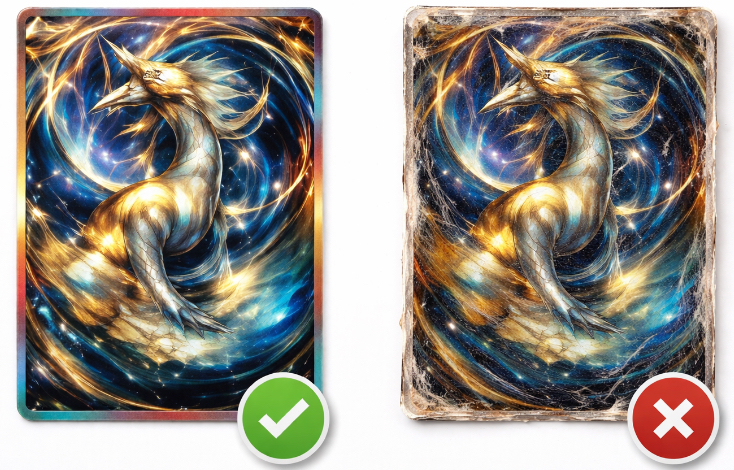
Vintage cards have often spent decades in binders, boxes, or collections. Finding a genuinely well-preserved copy can therefore be challenging, particularly for desirable holographic cards.
When buying a raw card, inspect both sides under good lighting. A card that looks clean in a listing photo may still have scratches, dents, or whitening that are difficult to see from a single angle.
Condition is also closely connected to professional grading, which we will discuss later in this guide.
2. Centering
Centering describes how evenly the printed design sits within the card’s borders. A well-centered card has relatively balanced margins on the left and right, as well as at the top and bottom.
Centering is determined during manufacturing rather than through subsequent handling. Even a card pulled directly from a sealed pack can have noticeably uneven borders.
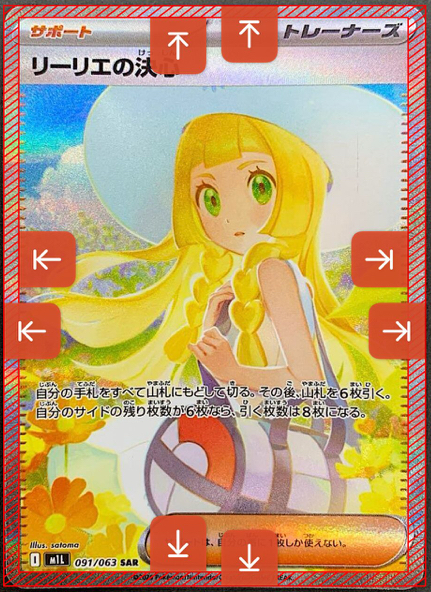
When evaluating centering, check:
- The width of the left border compared with the right border.
- The height of the top border compared with the bottom border.
- The alignment of the printed design relative to the card edges.
- The centering of the reverse side, which should be inspected separately.
Centering matters to collectors seeking high professional grades. A card can have an attractive surface and sharp corners yet still receive a lower grade because of its alignment.
However, the market impact depends on the individual card. Severe miscentering may reduce the appeal of an otherwise desirable card, while some collectors specifically seek unusual factory-cut examples.
3. Holographic Swirls
Holographic swirls are circular patterns that appear within the reflective area of certain Pokémon cards. Depending on the card and its holographic pattern, these swirls can become an appealing detail for collectors.
Some collectors prefer cards with a clearly visible swirl near the illustrated Pokémon. Others place little importance on the feature and focus instead on the card’s condition, artwork, or rarity.

Several details can influence the appeal of a swirl:
- How clearly the circular pattern is visible.
- Its position relative to the illustrated Pokémon.
- Whether the pattern is partially or fully visible.
- How the swirl interacts visually with the artwork.
- The popularity of the individual card.
It is important to distinguish collector preference from official grading criteria. A swirl is not a separate PSA grading category, and its presence does not guarantee a price premium. If two cards differ in condition, the better-preserved copy may still be more desirable even if it lacks a swirl.
For collectors who enjoy the visual details of vintage holographic cards, however, finding an especially attractive swirl can be part of the fun.
4. Poké Ball-Shaped Holographic Patterns
Some collectors use terms such as “Poké Ball holo” or “Poké Ball swirl” to describe a rounded holographic pattern that resembles a Poké Ball. The exact appearance depends on the card and the reflective pattern involved.
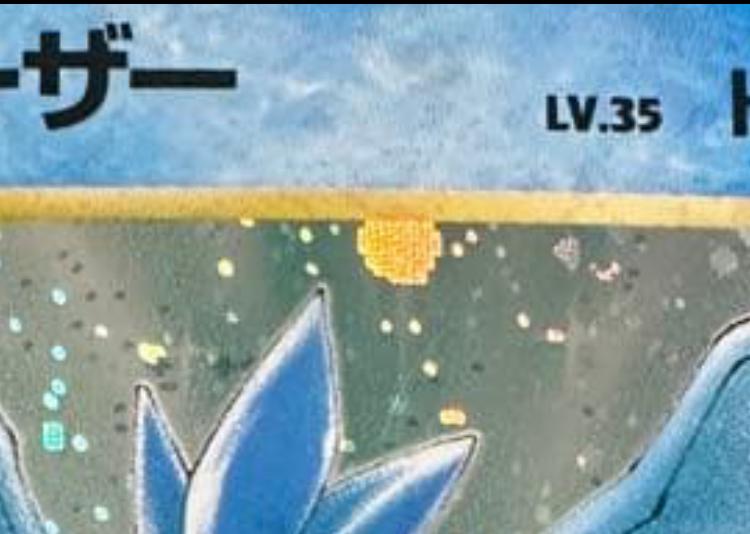
Like ordinary holographic swirls, these patterns can attract attention because they create visual differences between otherwise similar copies.
Their market impact is not standardized. Some buyers may pay extra for a pattern they particularly like, while others may see no meaningful difference in value.
Before paying a premium, compare actual sales of similar cards. A seller’s asking price alone does not establish that a particular holographic pattern has additional market value.
5. Holo Bleed and Unusual Holographic Coverage
Holo bleed is a term collectors use when holographic material appears to extend beyond the area where it would normally be expected. The appearance and extent of the effect can vary between cards and printing processes.
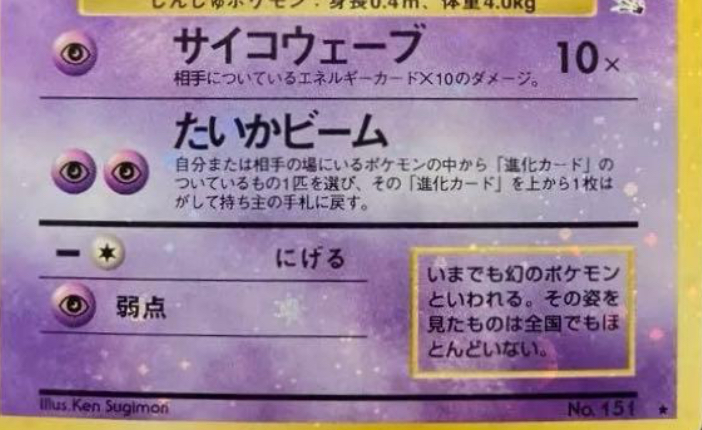
Collectors sometimes find these cards interesting because the holographic effect creates a different visual presentation from a typical copy.
However, unusual holographic coverage should not automatically be classified as a rare printing error. The intended manufacturing process, the card’s particular printing characteristics, and the nature of the variation all matter.
Before purchasing a card at a premium, look for clear photographs and compare it with examples of the same card. It is also worth distinguishing genuine manufacturing variations from scratches, surface damage, or other conditions that merely look unusual under certain lighting.
6. Professional Grading by PSA
Professional grading can make a substantial difference to how a Pokémon card is presented and traded. PSA evaluates cards and assigns numerical grades, with PSA 10 representing the highest grade on its standard scale.
The grading process evaluates the card’s overall condition, including centering, corners, edges, and surface. The assigned grade is not simply an average of these characteristics; a significant flaw in one area can prevent a card from receiving a top grade.

Why do collectors value graded cards?
- Standardized assessment: A numerical grade provides a common reference point for buyers and sellers.
- Protection: Encapsulation helps protect the card from ordinary handling and environmental exposure.
- Authentication: Grading services may assess authenticity as part of their process, subject to the service and card involved.
- Market comparison: Collectors can compare sales of copies with the same grade.
Nevertheless, grading does not guarantee a higher selling price or a profit. Fees, shipping, insurance, turnaround time, and buyer demand all affect whether submitting a card makes financial sense.
A PSA 10 copy may command a significant premium over a lower-graded example of a highly sought-after vintage card. For less desirable cards, however, the difference may not justify the cost of grading.
7. Consecutive PSA Certification Numbers
Some collectors seek graded cards with consecutive PSA certification numbers. These are cards whose assigned certification numbers follow one another, often because the cards were submitted together.
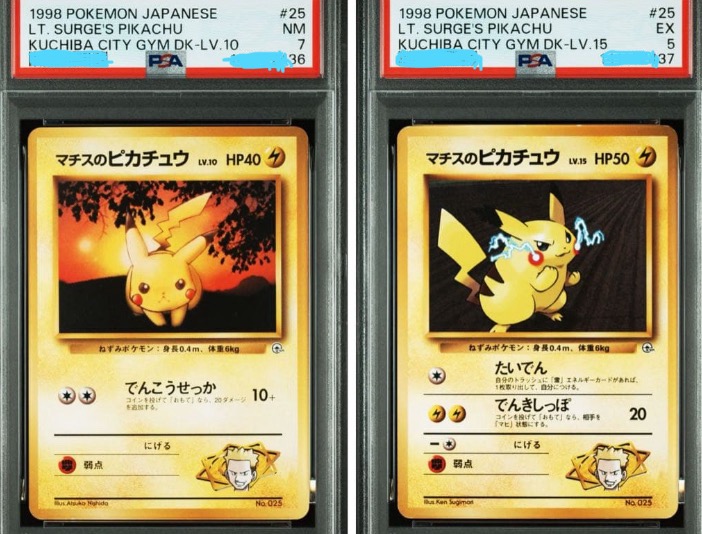
Consecutive numbers can appeal to collectors assembling a coordinated display or a group of cards from the same collection. For example, someone collecting a complete set of related Pokémon cards may enjoy owning several slabs with consecutive certification numbers.
However, consecutive numbers do not automatically indicate that cards were printed together, came from the same original pack, or share a particular production history. Certification numbers are administrative identifiers, not proof of a card’s manufacturing sequence.
Whether consecutive numbers add value depends on demand for the particular group. Without buyers who specifically want the sequence, the premium may be negligible or nonexistent.
8. PSA Population Reports
PSA population reports provide information about the number of cards recorded in its grading database. Collectors use these reports to understand how many examples of a particular card have received each grade.
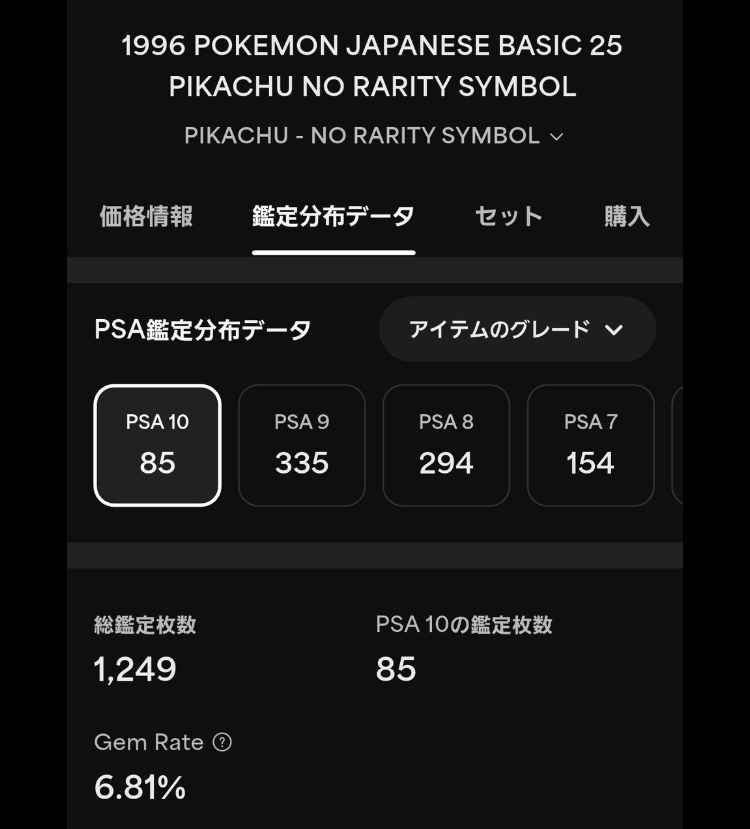
For example, a collector might compare the population of a vintage Japanese promo card graded PSA 10 with the number graded PSA 9.
A few distinctions are important:
- Total population: The number of grading records for the relevant card and grade categories.
- PSA 10 population: The number of recorded examples assigned a PSA 10.
- Population distribution: How the recorded cards are distributed across grades.
- Population changes: The figures can increase as additional copies are submitted for grading.
A low PSA 10 population can be interesting, but it does not establish that a card is rare in the overall market. Many ungraded copies may exist, and some cards are submitted far more frequently than others.
Population reports should therefore be interpreted alongside the card’s original distribution, known surviving supply, historical significance, and actual sales. A low number by itself does not guarantee strong demand or future price appreciation.
9. Illustrator Signatures
A signature from the card’s illustrator can make a Pokémon card especially interesting to collectors. For fans of vintage Japanese Pokémon cards, an authenticated autograph can add a personal connection to the artwork and the history of the franchise.

Several factors can influence the desirability of a signed card:
- The identity and reputation of the person who signed it.
- Whether the signature can be authenticated.
- The significance of the card and its artwork.
- The location, clarity, and visual presentation of the autograph.
- Whether the signature was obtained at a documented event or through another verifiable process.
A signed card is not necessarily more valuable than an unsigned copy. Some collectors prefer original, untouched cards, while others actively pursue signed examples.
Signatures can also affect grading and preservation. Writing on the card’s surface may prevent it from receiving a conventional unaltered-card grade, depending on the circumstances and the service involved. Autograph authentication and card grading are not the same thing.
10. Extended Artwork and Altered Cards
Extended artwork refers to artwork that has been physically or digitally modified to extend beyond a card’s original illustration or design. In trading card communities, the term often refers to cards that have been painted or otherwise altered by an artist.
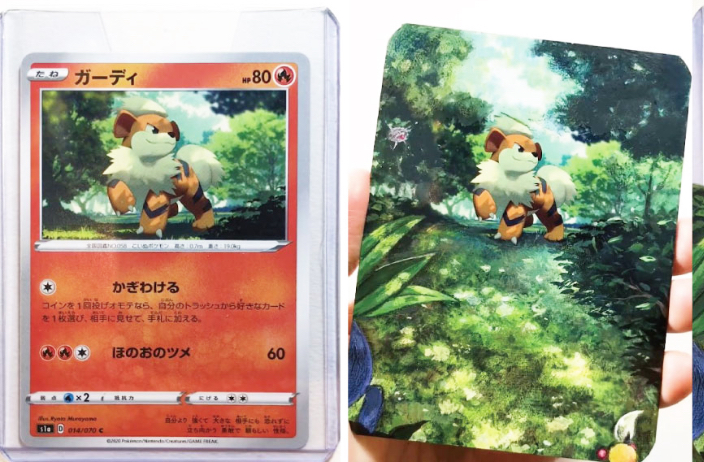
Extended artwork can be impressive, especially when the artist incorporates the original illustration into a larger composition. Some collectors value these cards as individual pieces of art.
However, altering an original Pokémon card changes its condition and collectibility. A hand-painted card should not be treated as equivalent to an unaltered original when comparing prices.
For vintage collectors focused on originality, an altered card may be less desirable. Buyers who appreciate custom artwork may value it for different reasons.
In other words, the value of an extended-art card depends heavily on the quality of the work, the artist, the buyer, and the distinction between the original card and the added artwork.
11. Printing Errors
Printing errors occur when a card deviates from its intended manufacturing specifications. Collectors sometimes seek these cards because the differences provide evidence of an unusual production outcome.
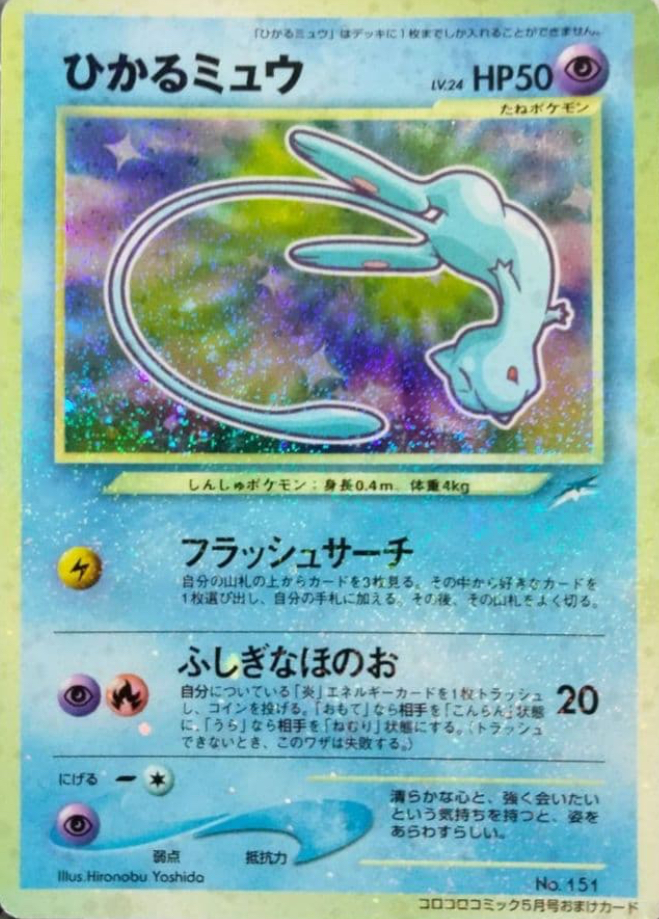
Examples of potential printing errors include:
- Missing ink: One or more printing colors may be absent or substantially reduced.
- Color misregistration: Printed layers may be visibly misaligned.
- Incorrect printing: A card may contain an unintended design or printing variation.
- Holographic errors: The foil pattern may differ from the intended result.
- Miscuts: The card may have been cut so incorrectly that part of an adjacent card or an unusual border becomes visible.
The example above illustrates a magenta-less error, in which the magenta component of the printing is missing or substantially reduced.
Not all apparent errors are genuine manufacturing errors. Fading, chemical damage, sunlight exposure, and alterations can produce unusual colors or patterns that resemble factory mistakes.
Even when an error is genuine, its effect on value depends on collector demand. A dramatic, well-documented error on a popular card may attract considerable interest, while a minor or common production variation may command little or no premium.
12. Color Variations and Print Darkness
Collectors sometimes notice that two copies of the same Pokémon card have different color intensity. One may appear darker or more saturated, while another looks lighter or less vivid.
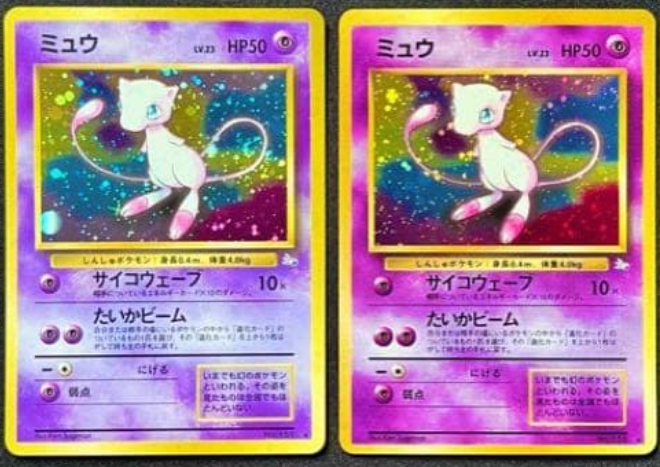
Possible explanations include normal printing variation, differences between print runs, changes in ink application, lighting conditions, and aging or deterioration after production.
Before concluding that a card has a rare printing variation, compare it with other copies of the same card. Ideally, use photographs taken under similar lighting and examine the cards directly when possible.
A darker card is not automatically rarer or more valuable. Some collectors enjoy comparing color variations, but a premium is justified only when there is credible evidence of a distinct variation and sufficient demand for it.
13. Miscuts and Cutting Errors
A miscut occurs when a card is cut incorrectly during manufacturing. The result can range from noticeably uneven borders to severe miscuts that reveal part of an adjacent card.
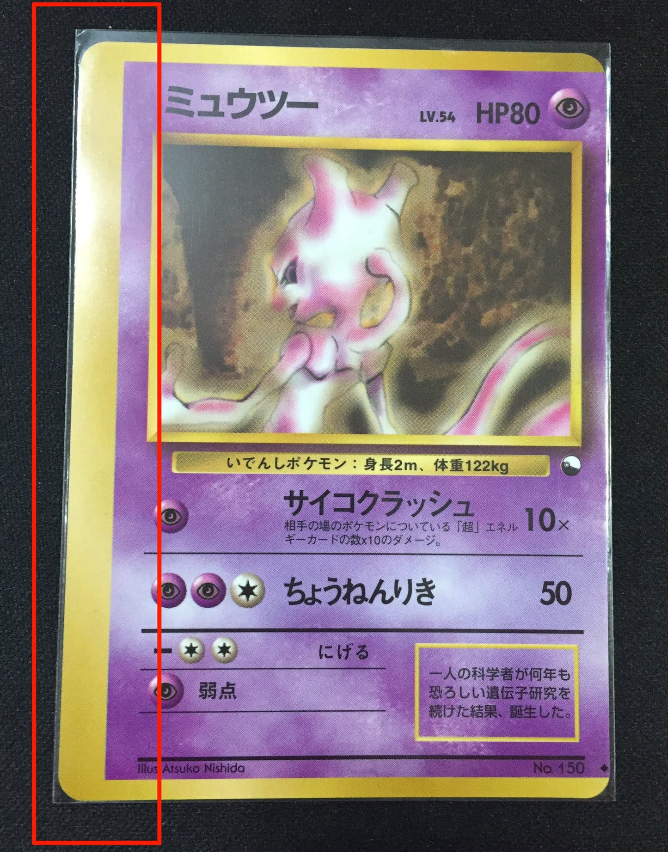
Miscuts can be appealing to collectors who specialize in manufacturing errors. A card with a dramatic cut may be more visually distinctive than a standard example.
However, an off-center card and a genuine miscut are not necessarily the same thing. A card can have uneven borders without meeting the usual collector definition of a significant miscut.
When evaluating a suspected miscut, look for evidence of the cutting process, including whether another card’s design or the expected sheet layout is visible. Clear photographs of all edges can help buyers assess the claim.
As with other errors, severity and demand matter. A dramatic, well-documented example may attract a premium, but a minor cutting irregularity does not automatically make a card valuable.
14. Pack-Induced Marks and Manufacturing Impressions
Vintage cards may show impressions or marks associated with manufacturing, packaging, storage, or contact with other cards. These can include pressure marks, indentations, and other unusual surface characteristics.
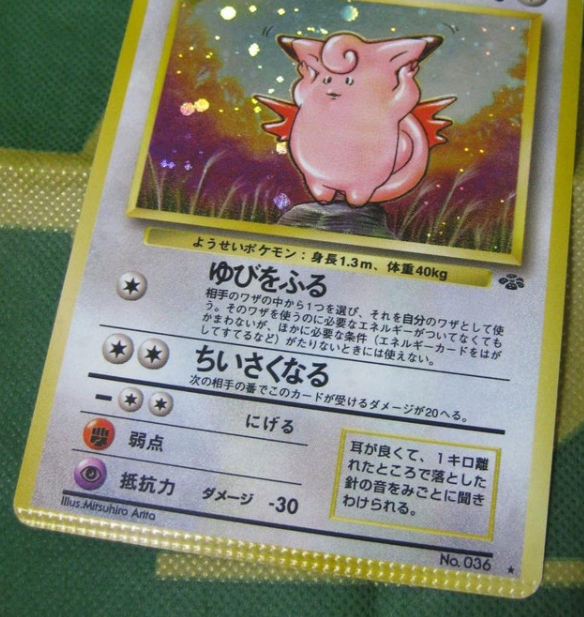
It is important to identify the cause of a mark before assigning it a special label. A mark that resembles a manufacturing impression could instead be damage caused by pressure, friction, or long-term storage.
Collectors sometimes find unusual factory-related characteristics interesting, but a visible indentation generally remains a condition concern. Professional graders may take surface imperfections into account regardless of whether they occurred during manufacturing or after the card was purchased.
Do not assume that a card with a suspected pack-related mark deserves a premium. Compare the feature with other examples, seek credible evidence of its origin, and examine actual sales before making a purchasing decision.
My Personal Ranking: Which Factors Matter Most?
The following table reflects my personal opinion about how these characteristics can influence collector interest and perceived value. It is not a statistical analysis of completed sales, an official grading standard, or a universal ranking for every Pokémon card.
The relative importance of each factor changes with the card. A distinctive printing error may be the main attraction for an error collector, while a collector assembling a high-grade set may care primarily about condition and centering.
| Factor | My Assessment of Its Potential Impact |
|---|---|
| Card condition | Very High |
| Centering | High |
| Holographic swirl | Moderate |
| Poké Ball-shaped holographic pattern | Limited or collector-dependent |
| Holo bleed | Moderate, depending on the example |
| Professional grading | High, depending on the card and grade |
| Consecutive certification numbers | Limited or collector-dependent |
| PSA population | Limited on its own; context matters |
| Illustrator signature | Moderate, depending on authentication and demand |
| Extended artwork | Limited for original-card collectors |
| Printing error | Potentially High for desirable errors |
| Color variation | Moderate, if the variation is established |
| Miscut | Potentially High for dramatic examples |
| Pack-related marks | Usually Limited or Negative |
My main takeaway is that unusual features should be evaluated in context. A card can be interesting without being more valuable, and a characteristic that attracts one collector may be irrelevant to another.
How to Research the Actual Market Value of a Vintage Pokémon Card
Understanding a card’s characteristics is only the first step. To estimate its market value, you also need to examine how comparable copies have actually sold.
1. Compare the Exact Card
Start by identifying the card’s language, set, card number, edition or printing, and any relevant promotional distribution details. Japanese vintage cards can have distribution histories and variations that are easy to overlook if you rely on English-language set information alone.
2. Separate Asking Prices from Completed Sales
An asking price tells you what a seller hopes to receive. It does not prove that buyers are willing to pay that amount.
Completed sales are generally a more useful starting point. When comparing results, look for the same card, a similar condition, the same grading company and grade where applicable, and a reasonably similar sales period.
3. Check Whether the Premium Is Real
If a seller charges extra for a swirl, unusual color, signature, or printing error, look for comparable sales that demonstrate whether buyers have actually paid a premium for that feature.
For uncommon variations, there may be too few comparable transactions to establish a reliable price. In those cases, it is better to acknowledge the uncertainty than to treat a single listing as definitive evidence.
4. Consider the Cost of Grading
If you are considering submitting a card to PSA or another grading service, compare the likely value of the graded card with its current raw value. Include grading fees, shipping, insurance, and any other costs.
Do not assume that every vintage card will benefit financially from grading. A card can be historically interesting or personally important without being a good grading candidate.
Final Thoughts
Vintage Pokémon cards have many characteristics worth exploring beyond their names and set numbers. Condition, centering, holographic patterns, printing errors, and grading records can all help collectors understand why individual copies differ.
At the same time, it is important to separate established condition factors from subjective collector preferences. A swirl does not guarantee a premium, a low PSA population does not prove that a card is scarce overall, and a suspected printing error is not automatically valuable.
The most reliable approach is to examine the card carefully, understand its history, compare genuinely similar examples, and use completed sales wherever possible.
Personally, I find these small differences one of the most interesting parts of collecting vintage Pokémon cards. Even when two cards look almost identical at first glance, taking a closer look can reveal details that make each copy worth examining in its own right.
Which of these factors matters most to you? Do you prioritize condition and centering, or do you enjoy unusual swirls, printing variations, and other distinctive features? I would be interested to hear how other collectors approach this question.
Related Guides
- Most Valuable Vintage Japanese Pokémon Cards
- Top 26 Most Valuable Vintage Japanese Pikachu Cards
- Japanese Gym Heroes Set: A Vintage Pokémon Card Guide
Looking for more vintage Pokémon card guides?
Visit the complete archive here: