▶ Browse the Vintage Japanese Pokémon Card Guide
Charizard from the Trade Please Campaign is one of the most recognizable and collectible vintage Japanese Charizard promos from the original Pokémon TCG era.
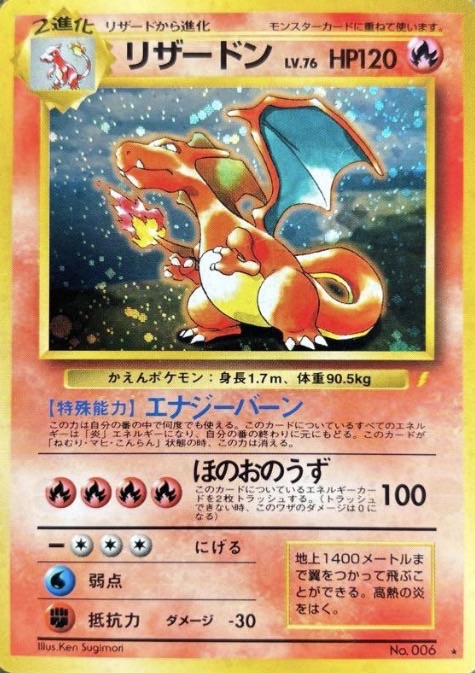
Released in Japan in 1998, this special Charizard was distributed through the Trade Please Campaign, an unusual promotion that allowed Japanese players to exchange two Pokémon cards for a promotional card set.
The card features a completely different illustration from the famous Japanese Base Set Charizard. Instead of Mitsuhiro Arita’s iconic artwork, this version was illustrated by Ken Sugimori, giving Charizard a much more aggressive and dramatic appearance.
There is another important part of its history.
The exact same card was later included with the Pokémon Song Best Collection CD released by Pikachu Records on January 1, 1999.
This has created a long-running source of confusion among collectors: some examples are referred to as the 1998 Trade Please Charizard, while others are called the 1999 CD Promo Charizard.
The important detail is that these are not two visibly different card printings.
The Trade Please and CD versions use the same Ken Sugimori artwork and the same Pikachu Records logo in the expansion-symbol position. The card itself does not contain a printed 1998 or 1999 date that allows collectors to separate the two provenances.
In other words, the same physical card could have been obtained through the 1998 Trade Please Campaign or encountered as part of the 1999 Pokémon Song Best Collection CD release.
That makes this Charizard one of the most interesting examples of how Japanese Pokémon cards were distributed during the first years of the Pokémon TCG.
For collectors interested in finding one today, examples are frequently listed through the secondary market:
Affiliate Disclosure: As an eBay Partner Network affiliate, I may earn a commission from qualifying purchases at no additional cost to you.
Card Information
- Card: Charizard
- Japanese Name: リザードン
- Pokédex Number: No.006
- Level: Lv.76
- HP: 120
- Type: Fire
- Stage: Stage 2
- Category: Japanese Unnumbered Promotional Card
- Original Distribution: Trade Please Campaign
- Campaign Period: February 10 – July 31, 1998
- Later Distribution: Pokémon Song Best Collection CD
- CD Release: January 1, 1999
- CD Catalog Number: TGCS-570
- Illustrator: Ken Sugimori
- Finish: Holo
- Expansion Mark: Pikachu Records logo
- English Equivalent: No identical English release
What Is the Trade Please Charizard?
The Trade Please Charizard is an unnumbered Japanese promotional card that was originally distributed through the Trade Please Campaign in 1998.
This was very different from opening a booster pack.
The campaign was based around the idea of trading existing Pokémon cards for a special promotional reward.
Participants obtained a campaign flyer and submitted it to MediaFactory together with two Pokémon trading cards and a return envelope.
They could then choose one of three courses.
The three courses corresponded to the original Kanto starter evolutions:
- Course A: Charizard + Trade Please! card
- Course B: Blastoise + Trade Please! card
- Course C: Venusaur + Trade Please! card
MediaFactory then mailed the selected pair back to the participant.
This means the Charizard was not simply given away at an event.
A collector originally had to participate in a specific exchange campaign to obtain it.
That unusual distribution method is a major part of the card’s appeal today.
The 1998 Trade Please Campaign
The original Trade Please Campaign ran from February 10 through July 31, 1998.
It was one of the earliest Japanese Pokémon TCG promotions designed around exchanging existing Pokémon cards.
The campaign was associated with Trade Please by Suzukisan, and participants used the campaign flyer to select their preferred course.
For the Charizard course, the participant received:
- Charizard
- Trade Please! Trainer card
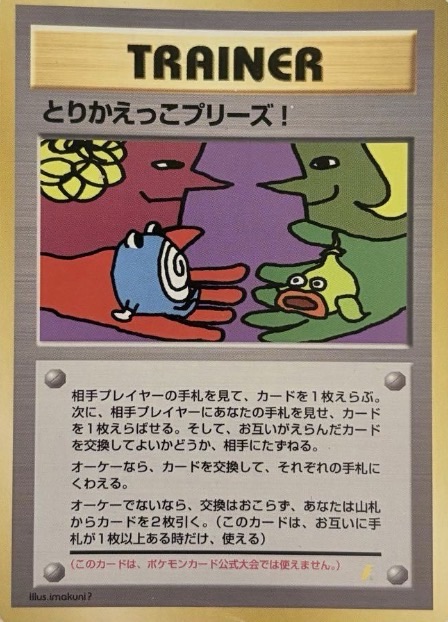
The other two courses substituted Blastoise or Venusaur for Charizard.
This is an important distinction from modern promotional campaigns.
The original Trade Please Charizard was effectively a reward for participating in a physical mail-in exchange.
That history gives the card a very different provenance from a normal expansion card.
The Three Trade Please Starter Pokémon
The campaign’s three Pokémon were the original Kanto starter evolutions:
Charizard, Blastoise, and Venusaur.
All three received special artwork by Ken Sugimori rather than simply reusing the standard Japanese Base Set illustrations.
This is one of the reasons the trio is so popular among collectors.
The three cards can be displayed together as a miniature collection representing the original Kanto starter trio.
Charizard naturally attracts the most attention because of its enormous popularity, but the Blastoise and Venusaur versions are also important parts of the same promotional history.
Ken Sugimori’s Charizard Artwork
One of the most distinctive characteristics of this card is its artwork.
The famous Japanese Base Set Charizard was illustrated by Mitsuhiro Arita.
The Trade Please Charizard is different.
This promo was illustrated by Ken Sugimori.
Charizard is shown in a much more direct and aggressive pose, with its body turned toward the viewer and its wings spread behind it.
The artwork has a very strong early-Pokémon aesthetic.
For collectors who specialize in Japanese-exclusive artwork, this is particularly significant because this illustration was never released in an identical English Pokémon TCG card.
That makes the Japanese version the only way to own this particular Charizard artwork in its original Pokémon TCG form.
How Strong Is the Connection to Base Set Charizard?
The Trade Please Charizard is closely related to the original Japanese Base Set Charizard in terms of its card mechanics.
It remains:
- Stage 2
- Fire-type
- 120 HP
- No.006 Charizard
- Energy Burn
- Fire Spin
The biggest visual difference is the artwork.
The Trade Please version therefore feels like an alternate-art version of the original Charizard concept rather than a completely different Pokémon card.
This combination of familiar mechanics and exclusive artwork is one of the reasons the card remains popular with both players and collectors.
The Energy Burn Pokémon Power
The card features the famous Energy Burn Pokémon Power.
This was one of the defining mechanics of the original Charizard.
Energy attached to Charizard could be treated as Fire Energy for the turn, allowing the Pokémon to use its powerful attack without requiring every attached Energy card to originally be Fire Energy.
The Japanese promotional wording differs slightly from the earliest Japanese Expansion Pack wording, but the underlying concept remains the same.
This connection to the original Charizard makes the Trade Please version especially attractive to collectors who remember the classic Base Set-era strategy.
Fire Spin — 100 Damage
Charizard’s second attack is Fire Spin.
It requires four Fire Energy and deals:
100 damage.
The drawback is that two Energy cards attached to Charizard must be discarded to use the attack.
This is essentially the classic high-damage Charizard design from the original era.
The combination of:
Energy Burn + Fire Spin + 120 HP
is one of the clearest links between this promotional Charizard and the original Base Set-era card.
The Pokémon Song Best Collection CD
The Trade Please Charizard has a second important chapter in its history.
On January 1, 1999, Pikachu Records released a compilation CD titled:
Pokémon Song Best Collection
The full Japanese title was:
みんなで選んだポケモンソング&ポケモンカード~ポケモン♪ベストコレクション
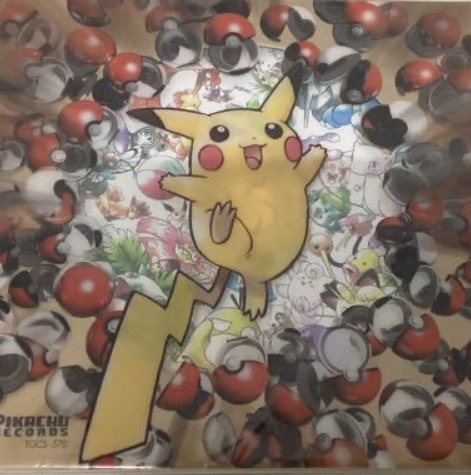
The CD carried catalog number TGCS-570 and contained 13 tracks selected through a magazine poll.
It also came with a 32-page illustrated lyric booklet and a selection of Pokémon promotional cards.
The Charizard included with the CD was the same Ken Sugimori Charizard that had originally been distributed through the Trade Please Campaign.
This is why collectors often refer to the card as the “CD Promo Charizard.”
Why Is It Called Both a 1998 and 1999 Promo?
This is one of the most confusing aspects of this card.
You will frequently see listings described as:
- 1998 Trade Please Charizard
- 1999 CD Promo Charizard
- Charizard No.006 CD Promo
- Trade Please Charizard
- Japanese Unnumbered Promo Charizard
The reason is simple.
The card was first distributed through the 1998 Trade Please Campaign.
The same card was then included with the 1999 Pokémon Song Best Collection CD.
The physical cards are not known to have a distinguishing printed feature that allows a collector to identify which distribution channel an individual loose copy came from.
Collectors and grading companies may therefore use different year labels depending on the card’s documented provenance or cataloging convention.
Trade Please vs. CD Promo: Is There Actually a Different Card?
This is the most important point for collectors.
There is not a separate visible “1998 version” and “1999 version” with different artwork or a different expansion mark.
Both distribution histories are associated with the same Ken Sugimori Charizard and the same Pikachu Records logo.
| Feature | Trade Please | CD Release |
|---|---|---|
| Distribution | Trade Please Campaign | Pokémon Song Best Collection CD |
| Date | 1998 | 1999 |
| Artwork | Ken Sugimori | Ken Sugimori |
| Expansion Mark | Pikachu Records logo | Pikachu Records logo |
| HP | 120 | 120 |
| Card Number | No.006 | No.006 |
For a loose card, the provenance may be impossible to determine.
If someone claims that a loose copy is definitely the 1998 Trade Please version, ask what evidence establishes that provenance.
A card itself does not carry a simple “1998” or “1999” identifier that solves the question.
The Pikachu Records Logo
Another defining characteristic is the logo printed where a normal expansion symbol would appear.
Instead of the usual set symbol, the card features the Pikachu Records logo.
Pikachu Records was the music label associated with Pokémon’s music releases.
This is why the same logo appears on the Charizard, Blastoise, and Venusaur cards associated with the CD release.
The logo is also present on the original Trade Please versions.
This makes the logo an important identification feature, but it does not distinguish the 1998 Trade Please distribution from the 1999 CD distribution.
Do Not Confuse It With the 2016 Trade Please Charizard
There is another card that creates even more confusion.
In 2016, Pokémon released a new Trade Please Campaign 20th for the 20th anniversary of the Pokémon TCG.
A new Charizard promo was distributed through that campaign.
However, this is not the same card.
The 2016 version is:
Charizard 280/XY-P
and has a substantially different card design and stats.
The 2016 card has:
- 150 HP
- Modern XY-era card layout
- 280/XY-P numbering
- Different attack damage
- Different card text
The original 1998 Trade Please Charizard is an old-back, unnumbered promo with 120 HP.
This distinction is extremely important when searching marketplaces.
The 2016 Trade Please Campaign
The 2016 campaign was designed as a 20th-anniversary callback to the original Trade Please promotion.
Participants could bring qualifying vintage Pokémon cards to participating Pokémon locations and exchange them through the new campaign.
The 2016 Charizard was therefore deliberately connected to the history of the 1998 promotion.
But collectors should treat the two as completely separate cards.
The original 1998 Charizard is part of the first-design / old-back era.
The 2016 Charizard belongs to the XY-P promotional era.
Trade Please Charizard vs. Neo Premium File 2 Charizard
Another Japanese Charizard can also cause confusion because it uses Ken Sugimori artwork.
The Neo Premium File 2 Charizard was released in 2000 and also features Ken Sugimori artwork.
However, it is a completely different card.
The Neo Premium File 2 version has a different card layout, different Pokémon Power, and a different holo treatment.
The Trade Please/CD Charizard has:
Energy Burn
while the Neo Premium File 2 Charizard has:
Fire Raise.
The Neo Premium File 2 card is also associated with the Japanese Premium File 2 product rather than the Trade Please Campaign.
These differences make the two relatively easy to separate once you know what to look for.
Japanese-Exclusive Charizard Artwork
The Trade Please Charizard belongs to an interesting group of Japanese-exclusive Charizard artworks.
Collectors can find major Charizard illustrations that were never reproduced in the English Pokémon TCG.
The Trade Please/CD artwork is one of the most recognizable examples.
Its combination of:
- Ken Sugimori artwork
- Old Japanese card design
- Holofoil
- Unnumbered promo status
- Pikachu Records logo
- 1998 Trade Please history
makes it particularly desirable to collectors who specialize in Japanese-exclusive Charizard cards.
Why Is This Charizard So Collectible?
Several different collecting themes come together in this one card.
- Charizard: One of the most collected Pokémon in the hobby.
- Ken Sugimori: A major artist from the original Pokémon era.
- Japanese-exclusive artwork: The exact artwork was never released in English.
- Trade Please Campaign: A unique 1998 mail-in exchange promotion.
- CD history: The same card was included with the 1999 Pokémon Song Best Collection.
- Old-back design: It comes from the earliest era of Japanese Pokémon cards.
- Holofoil: The card has the vintage holo treatment collectors expect from early Charizard releases.
- Multiple provenance stories: The same card can legitimately be associated with either the 1998 campaign or the 1999 CD release.
That combination gives this Charizard a much deeper collecting history than its simple card number might suggest.
How Rare Is It?
This is where the card becomes particularly interesting.
The Trade Please Charizard is certainly an uncommon vintage Japanese promo, but its value should not be explained simply by claiming that PSA 10 copies are extremely scarce.
In fact, PSA’s current population data shows a surprisingly large number of Gem Mint copies.
PSA’s database currently reports roughly 7,000 PSA 10 examples for the Japanese CD Promo Charizard #6.
Heritage Auctions also reported in August 2026 that PSA had certified 6,983 copies at Gem Mint 10 at the time of its auction.
That is an enormous PSA 10 population compared with many Japanese vintage promos.
So why does the card still sell for thousands of dollars in PSA 10?
The answer is primarily Charizard demand.
This is an important lesson for collectors.
A high PSA population does not automatically make a card inexpensive if demand is strong enough.
PSA 10 Population vs. Price
The relationship between population and price is particularly interesting here.
The card has thousands of PSA 10 examples, yet recent PSA 10 sales have still reached roughly:
$3,300–$4,600+.
That means the market is not paying a premium because there are only a handful of Gem Mint copies.
Instead, collectors are paying for the combination of:
- Charizard
- Vintage Japanese provenance
- Ken Sugimori artwork
- Japanese-exclusive status
- Holofoil
- Trade Please history
- CD Promo history
This makes the card a useful case study in how Pokémon card value can be driven by collector demand rather than population scarcity alone.
Current Price Guide
The market for this Charizard is unusually broad.
Recent raw sales have ranged from a few hundred dollars to around $1,000 or more depending on condition and the exact transaction.
PriceCharting’s current market estimate is approximately $614 for an ungraded copy, while recent individual sales include examples around $300, $385, $500, $570, $650, $800, $900, and above $1,000.
Condition is therefore extremely important.
| Condition | Current Market Reference |
|---|---|
| Raw / Played | ≈ $300–$500+ |
| Raw / Excellent–NM | ≈ $600–$1,000+ |
| PSA 9 | ≈ $1,200–$1,500 |
| PSA 10 | ≈ $3,300–$4,600+ |
These are market references rather than guaranteed prices.
A rare vintage Charizard can sell substantially above or below a general market estimate depending on centering, holo pattern, eye appeal, auction timing, and buyer demand.
Recent PSA 10 Sales
The recent PSA 10 market provides a useful picture of current demand.
Publicly recorded transactions include:
- August 7, 2026: approximately $3,550
- August 10, 2026: approximately $3,523–$3,660
- August 26, 2026: approximately $3,938
- August 28, 2026: approximately $3,250
- August 29, 2026: approximately $4,500
- September 1, 2026: approximately $3,400–$4,600
- September 3, 2026: approximately $3,563 at Heritage Auctions
- September 4, 2026: approximately $3,850
- September 5, 2026: approximately $3,904
- September 6, 2026: approximately $3,318
The data shows that a reasonable current PSA 10 range is around $3,300–$4,600, with occasional transactions outside that range.
One recent Heritage Auctions result was $3,375 for a Gem Mint 10 example.
Because this is an actively traded Charizard, however, collectors should continue checking recent completed sales rather than relying on an old price guide.
PSA 9 Prices
PSA 9 examples occupy a very different price tier.
Recent sales have generally been around:
$1,200–$1,500.
Examples recorded in late August and early September 2026 include approximately:
- $1,204
- $1,300
- $1,325
- $1,391
- $1,400
- $1,431
- $1,475
This illustrates the substantial premium associated with the jump from PSA 9 to PSA 10.
Even though PSA 10 copies are plentiful compared with many vintage Japanese promos, collectors still place a significant premium on Gem Mint examples.
Raw Copies Can Be Surprisingly Expensive
One of the most important things to understand about this card is that a raw copy is not automatically cheap.
Recent raw sales have included:
- Approximately $230
- Approximately $300
- Approximately $385
- Approximately $500
- Approximately $570
- Approximately $650
- Approximately $725
- Approximately $800
- Approximately $900
- More than $1,000 for strong examples
The enormous range reflects the condition sensitivity of vintage Japanese holo cards.
A heavily played copy and a genuinely clean Near Mint copy can represent very different collectibles.
This is especially important when comparing a raw card with a PSA 9 or PSA 10.
What Makes a High-Grade Copy Desirable?
Collectors looking for a premium raw copy should inspect:
- Holo surface: Scratches are one of the most important factors.
- Holo pattern: Swirls can add visual appeal, although they do not automatically increase the official grade.
- Centering: Compare the borders carefully.
- Corners: Look for whitening and soft corners.
- Edges: Check for chipping and whitening.
- Back: Vintage Japanese cards can show whitening that is difficult to see in front-facing photographs.
- Surface: Inspect under angled light for dents and scratches.
A card can look excellent in a normal photograph and still have defects that prevent a high grade.
Swirls and Holo Patterns
Another popular characteristic among collectors is the presence of a holo swirl.
The holofoil pattern on vintage Japanese cards can produce circular or spiral shapes that collectors often call swirls.
These are not separate official variants.
Two otherwise identical cards can have very different holo patterns because of the way the foil pattern falls across the artwork.
For collectors, a strong swirl can increase the visual appeal of an individual copy.
However, it should not be confused with an official printing difference.
A swirl does not establish whether a copy originally came from the 1998 Trade Please Campaign or the 1999 CD.
Can You Tell the 1998 Trade Please Card From the 1999 CD Card?
Not reliably from the loose card alone.
This is one of the most important conclusions for collectors.
The two distribution histories are documented, but the physical cards are effectively indistinguishable.
Both carry the same:
- Ken Sugimori artwork
- Pikachu Records logo
- 120 HP
- Lv.76
- No.006
- Energy Burn
- Fire Spin
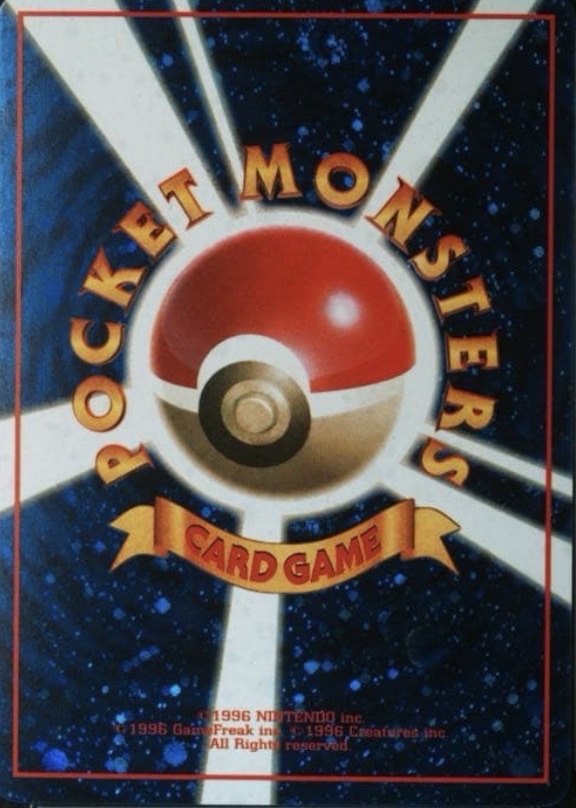
- Old Japanese card back
If a raw seller claims to have a guaranteed 1998 Trade Please copy, the claim should be based on provenance, not a visual feature that supposedly identifies the year.
This is also why grading-company labels can sometimes cause confusion.
Why PSA Labels May Say 1998 or 1999
Collectors have reported seeing both 1998 and 1999 descriptions associated with this card.
The reason is the card’s two documented distribution histories.
PSA currently catalogs the card as:
1999 Pokémon Japanese CD Promo #6 Charizard-Holo
while other listings and grading records may identify it with the 1998 Trade Please Campaign.
This does not mean there are necessarily two visually distinguishable Charizard cards.
It reflects the complicated history of a card that was first distributed in 1998 and then reused as an insert in the 1999 CD release.
For collectors, provenance and grading-label terminology should therefore be treated separately from the physical card itself.
The Pokémon Song Best Collection Was More Than a CD
The 1999 CD is itself a fascinating piece of Pokémon history.
The album was released by Pikachu Records with catalog number TGCS-570.
It contained 13 songs selected through a magazine poll.
The package also included:
- A 32-page illustrated lyrics booklet
- A selection of Japanese Pokémon TCG promotional cards
- An English-language Pikachu card
The Charizard, Venusaur, and Blastoise included with the CD were all cards that had already appeared through other Japanese promotional channels.
This means the CD did not introduce a new Charizard artwork.
Instead, it gave collectors another way to obtain an existing promotional card.
Why the CD Release Is Important to Collectors
The CD connection demonstrates how different Pokémon cards could be distributed in Japan during the late 1990s.
Pokémon cards were not limited to:
booster packs + starter decks + tournaments.
They could also appear through:
- Music CDs
- Magazines
- Food products
- Mail-in campaigns
- Video games
- Fan Club programs
- Movie promotions
The Trade Please Charizard sits directly inside this broader ecosystem.
That distribution history is one of the reasons Japanese vintage Pokémon collecting is so much deeper than simply completing expansion sets.
Is There an English Version?
There is no English version of this Ken Sugimori Trade Please/CD artwork.
English-speaking collectors did receive Charizard cards using other artworks.
The famous English Base Set Charizard uses Mitsuhiro Arita’s artwork, while other English Charizard releases use completely different illustrations.
The specific Ken Sugimori artwork used for the Trade Please/CD Japanese promo was not reproduced as an identical English TCG card.
This gives the Japanese version a strong appeal for collectors who specialize in Japanese-exclusive artwork.
Trade Please Charizard vs. Japanese Base Set Charizard
These cards are easy to confuse if you are only looking at the Pokémon itself.
| Feature | Trade Please Charizard | Japanese Base Set Charizard |
|---|---|---|
| Illustrator | Ken Sugimori | Mitsuhiro Arita |
| Distribution | Trade Please / CD | Expansion Pack |
| Card Number | No.006 | No.006 |
| HP | 120 | 120 |
| Artwork | Ken Sugimori | Mitsuhiro Arita |
For collectors building a Charizard artwork collection, owning both provides an excellent comparison between two important Japanese Charizard illustrations from the original era.
What to Check Before Buying
The biggest mistake is assuming that every seller using the phrase “Trade Please Charizard” is selling the exact card you want.
Before buying, check:
- Illustrator: Ken Sugimori
- HP: 120
- Level: Lv.76
- Pokédex number: No.006
- Card type: Fire
- Artwork: Ken Sugimori Trade Please artwork
- Pikachu Records logo: Present in the expansion-symbol position
- Card back: Original Japanese old back
- Holo: Vintage holofoil
Also make sure you are not accidentally buying:
- Japanese Base Set Charizard
- Neo Premium File 2 Charizard
- 2016 Trade Please 20th Charizard 280/XY-P
- An English Charizard
eBay Market
eBay is one of the easiest international marketplaces for finding this Charizard.
Because sellers use different terminology, searching multiple combinations is recommended.
Useful searches include:
- Japanese Trade Please Charizard
- Charizard CD Promo Japanese
- Charizard No.006 CD Promo
- Japanese Charizard 1998 Trade Please
- Japanese Charizard Pikachu Records
- Ken Sugimori Charizard Japanese Promo
- リザードン とりかえっこプリーズ
- リザードン CDプロモ
Searching for both Trade Please and CD Promo is particularly important because sellers may describe the same card using either name.
Check eBay Sold Prices
For this card, completed sales are much more useful than active listings.
Current asking prices can be extremely inconsistent.
A raw copy might be listed for several hundred dollars, while another seller may ask more than $1,000 for a similar-looking card.
Likewise, PSA 10 listings can be priced well above recent completed sales.
When evaluating the market, compare:
- The same card
- The same grade
- Similar centering
- Similar holo condition
- Recent transaction dates
Do not assume that an expensive active listing represents the actual market value.
Should You Buy Raw or Graded?
For this Charizard, the answer depends on the collector.
A raw copy offers the opportunity to examine the card personally and potentially find a strong grading candidate.
However, the difference between an attractive raw copy and a PSA 10 can be enormous.
Recent market references show approximately:
Raw: around $600
PSA 9: around $1,400
PSA 10: around $3,800
These figures can change quickly.
For collectors who simply want the artwork, a clean raw copy may offer much better value.
For collectors specifically building a PSA collection, the premium for a PSA 10 may be justified by the certification and eye appeal.
Is This a Good Card for a Charizard Collection?
Absolutely.
For a collector building a comprehensive Charizard collection, this card represents an important Japanese-exclusive branch of Charizard history.
It is particularly attractive because it checks several boxes simultaneously:
- Original-era Pokémon TCG
- Japanese-exclusive artwork
- Ken Sugimori illustration
- Holofoil
- Unnumbered promo
- Trade Please Campaign
- CD Promo history
- Classic Energy Burn mechanics
It also provides an interesting contrast with the more famous Mitsuhiro Arita Base Set Charizard.
Frequently Asked Questions
What is the Trade Please Charizard?
The Trade Please Charizard is an unnumbered Japanese promotional Charizard originally distributed through the Trade Please Campaign in 1998.
When was the Trade Please Charizard released?
The original Trade Please Campaign ran from February 10 through July 31, 1998.
How was the card obtained?
Participants mailed a campaign flyer together with two Pokémon trading cards and a return envelope and selected one of three courses. The Charizard course returned Charizard together with the Trade Please! promotional Trainer card.
Was the Charizard also included with a CD?
Yes. The same card was included with the Pokémon Song Best Collection CD released by Pikachu Records on January 1, 1999.
Is the 1998 Trade Please Charizard different from the 1999 CD Promo Charizard?
The two distribution histories are different, but the physical cards are effectively indistinguishable. Both use the same Ken Sugimori artwork and Pikachu Records logo.
How can I tell whether my card is the 1998 or 1999 version?
A loose card generally cannot be reliably assigned to one distribution channel by visual inspection alone. Provenance is the important distinction.
Who illustrated the Trade Please Charizard?
The artwork was illustrated by Ken Sugimori.
How much HP does the card have?
The Charizard has 120 HP and is Lv.76.
Does the card have Energy Burn?
Yes. It features the classic Energy Burn Pokémon Power and the Fire Spin attack for 100 damage.
Is there an English version of this artwork?
No. The Ken Sugimori artwork used for the Trade Please/CD Charizard was not released as an identical English Pokémon TCG card.
Is the CD Promo Charizard a separate card?
It is best understood as the same promotional card being distributed through another channel. The 1999 CD release used the same Charizard that had already been distributed through the 1998 Trade Please Campaign.
Is there a 2016 Trade Please Charizard?
Yes. Charizard 280/XY-P was released through the Trade Please Campaign 20th in 2016. It is a completely different card with a modern XY-era design and 150 HP.
Is the Trade Please Charizard rare in PSA 10?
Not by PSA population alone. PSA’s current database reports roughly 7,000 PSA 10 copies. Its high value is driven much more by Charizard demand, vintage status, Japanese exclusivity, artwork, and collector interest than by an exceptionally tiny PSA 10 population.
How much is a PSA 10 worth?
Recent PSA 10 sales have generally been around $3,300–$4,600+, although individual transactions can fall outside that range.
Where can I buy one?
eBay is one of the easiest international marketplaces to monitor. Search for both Trade Please Charizard and Japanese CD Promo Charizard because sellers use both descriptions.
Final Thoughts
The Trade Please Charizard is one of the best examples of why Japanese vintage Pokémon collecting is about much more than simply completing a set checklist.
The card began its life in the 1998 Trade Please Campaign, where Japanese collectors could exchange two Pokémon cards and receive a promotional pair featuring the Charizard, Blastoise, or Venusaur of their choice.
Then, in 1999, the same Charizard appeared again as part of the Pokémon Song Best Collection CD.
That unusual history explains why the card can legitimately be called both a Trade Please Charizard and a CD Promo Charizard.
The artwork is another major attraction.
Ken Sugimori’s Charizard is completely different from the famous Mitsuhiro Arita Base Set artwork, and this particular illustration was never released as an identical English TCG card.
For collectors, that makes the Japanese version the only way to own this specific vintage Charizard artwork in its original TCG form.
The market is also fascinating.
Recent raw examples can range from a few hundred dollars to around $1,000 or more, while PSA 9 copies have recently sold around $1,200–$1,500 and PSA 10 examples have reached approximately $3,300–$4,600+.
Yet the card is an excellent reminder that price and population are not always directly correlated.
With roughly 7,000 PSA 10 copies reported, this is not an ultra-low-population Gem Mint card.
Its value comes from something else:
Charizard demand, Japanese exclusivity, Ken Sugimori artwork, vintage status, holofoil, and an unusual distribution history spanning both the Trade Please Campaign and the Pokémon Song Best Collection CD.
For collectors building a Japanese Charizard collection, an old-back promo collection, or a collection focused on obscure Japanese distribution methods, the Trade Please Charizard is one of the essential cards to know.
And perhaps the most important thing to remember when buying one is this:
The 1998 Trade Please card and the 1999 CD Promo are not two visually obvious variants.
They are two chapters in the history of the same fascinating Charizard.
Related Guides
- Trade Please Blastoise Guide
- Masaki Gengar Price Guide
- Pokémon Starter Gift Box 1999 Guide
- Most Valuable Vintage Japanese Pokémon Cards
Looking for more vintage Pokémon card guides?
Visit the complete archive here: