Japanese vintage Pokémon cards have some fascinating variations, and Scyther is a great example. While many collectors know the original Jungle Scyther, Japan released other versions with different card specifications and finishes.
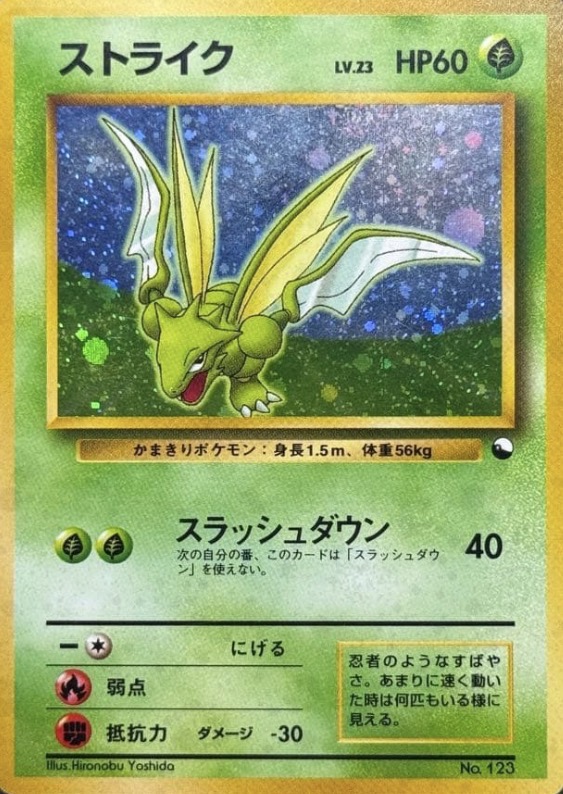
One particularly interesting version is the 1998 Quick Starter Gift Scyther. It shares its level and HP with the Scyther from the Japanese Vending Series, but its special holographic finish makes it a distinctive collectible.
For collectors building a vintage Scyther collection, understanding the differences between the Quick Starter Gift, Vending Series, and Jungle versions is essential. They may feature the same Pokémon, but they are distinct releases.
📌 Key Facts
| Card | Scyther |
| Pokédex No. | 123 |
| Release | Quick Starter Gift, December 1998 |
| Level / HP | Lv. 23 / 60 HP |
| Card Finish | Holographic |
| Related Release | Japanese Vending Series, Green Sheet |
| Collector Appeal | A distinctive vintage Japanese holo variation |
Last Updated: October 11, 2026
Affiliate Disclosure: As an eBay Partner Network affiliate, I may earn a commission from qualifying purchases at no additional cost to you.
1. Quick Starter Gift Scyther: A Special Japanese Holo
The Quick Starter Gift was released in Japan on December 4, 1998, at a retail price of ¥3,900 before tax. This special starter product included preconstructed decks and accessories for the Pokémon Trading Card Game.
One of its most interesting features was a group of five holographic cards: Zapdos, Moltres, Articuno, Scyther, and Master Ball.
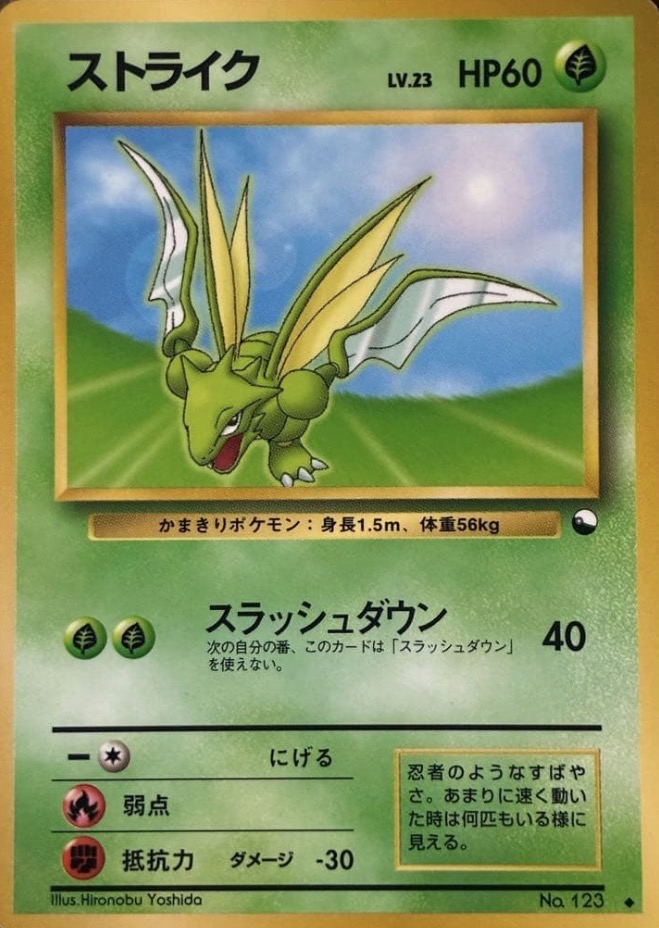
The Quick Starter Gift Scyther is particularly interesting because its Lv. 23 and 60 HP specifications match those of the Scyther associated with the third Japanese Vending Series sheet. However, the holographic finish distinguishes the Quick Starter Gift version from the regular vending release.
This combination makes it more than an ordinary reprint for collectors interested in the variations found in early Japanese Pokémon cards.
Another important detail is that the Quick Starter Gift version has no rarity symbol. This helps distinguish it from the diamond-marked Vending Series card.
2. Quick Starter Gift vs. Vending Series vs. Jungle Scyther
These three Japanese Scyther cards are easy to confuse if you search only by Pokémon name. Checking the printed level, HP, rarity symbol, and card finish is a much safer approach.
| Feature | Quick Starter Gift | Vending Series | Jungle |
|---|---|---|---|
| Product | Quick Starter Gift | Vending Series, Green Sheet | Pokémon Jungle |
| Level | 23 | 23 | 25 |
| HP | 60 | 60 | 70 |
| Rarity Symbol | No symbol | ◆ | ★ |
| Finish | Holographic | Vending Series finish | Regular card finish |
The Quick Starter Gift and Vending Series versions share the same level and HP, but their rarity symbols and surface finishes differ.
The Jungle Scyther is easier to distinguish because it is Lv. 25 with 70 HP and has a star rarity symbol.
If you are specifically looking for the holographic Scyther, make sure the listing shows the Quick Starter Gift version. A search result containing only the name “Japanese Scyther” is not enough to identify the correct card.
3. The Japanese Vending Series Connection
The Japanese Vending Series is a distinctive part of vintage Pokémon TCG history. Unlike conventional booster-pack releases, these cards were distributed through vending machines and featured their own characteristic presentation.
The third Vending Series sheet included a Scyther with Lv. 23 and 60 HP. The Quick Starter Gift version shares these specifications but adds a holographic treatment.
For collectors who enjoy artwork and release variations, owning both versions offers an interesting comparison: one represents the Vending Series, while the other showcases a special holographic release associated with the Quick Starter Gift.
4. How Does Jungle Scyther Differ?
Jungle Scyther is another important card for collectors of early Pokémon releases.
The Japanese Jungle version has Lv. 25, 70 HP, and a star rarity symbol. These printed details make it distinct from both the Quick Starter Gift and Vending Series versions.
While the Quick Starter Gift Scyther is notable for its holographic treatment, Jungle Scyther belongs to a different release and has its own appeal among collectors of early set cards.
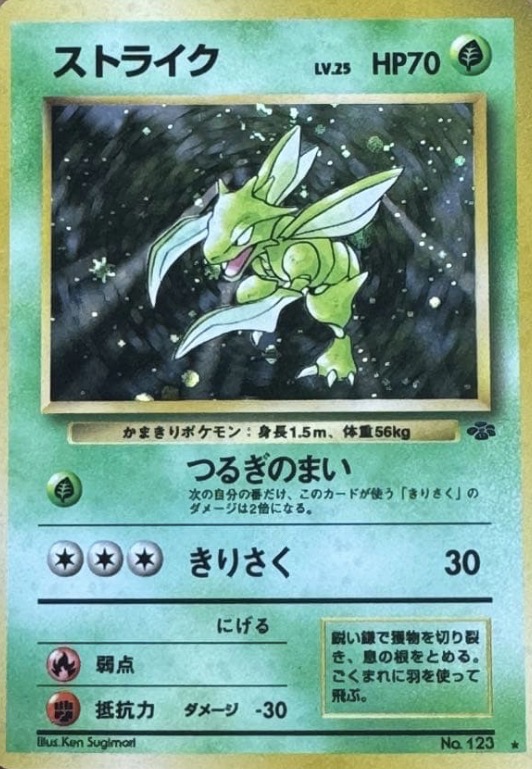
When shopping, use the printed level and HP as quick reference points. They are more reliable than a seller’s title alone.
5. Vintage Japanese Scyther Price Guide
Prices for vintage Japanese Scyther cards vary according to condition, grading, and the specific release. Holographic surface quality is particularly important for the Quick Starter Gift version.
The figures below are preliminary reference points based on the Japanese-market estimates supplied for this article. They are not verified October 2026 sold-price averages. Convert yen prices using the current exchange rate before treating them as USD valuations.
| Card | Condition | Reference |
|---|---|---|
| Quick Starter Gift Scyther | Near Mint | $200 |
| Quick Starter Gift Scyther | PSA 9 | Around $400 and up |
| Quick Starter Gift Scyther | PSA 10 | Around $700 and up |
| Vending Series Scyther | Near Mint | Around $70 |
| Jungle Scyther | Near Mint | Around $50 |
Important: These are indicative Japanese-market estimates, not confirmed current USD market values. Actual selling prices may differ significantly. Asking prices, completed sales, and auction results should be evaluated separately.
For PSA 10 copies, a small number of high asking prices does not establish the market value. Check completed transactions, verify the exact card version, and compare certification details before purchasing.
6. What to Check Before Buying
Before purchasing a Quick Starter Gift Scyther, confirm the following details.
- Card identity: Verify that the card is the Quick Starter Gift version, not the regular Vending Series release.
- Holographic finish: Request clear photographs that show the holo surface.
- Rarity symbol: The Quick Starter Gift version has no rarity symbol, unlike the diamond-marked Vending Series card.
- Surface condition: Look for scratches, scuffs, print defects, and other signs of wear.
- Edges and corners: Check for whitening, dents, and damage.
- Back of the card: Inspect the back for scratches, stains, and edge wear.
- Graded copies: Verify the certification number and the card identification on the grading company’s database.
- Price history: Compare completed sales rather than relying solely on current asking prices.
Some collectors also prefer holographic cards with a visible swirl pattern. Swirls can add visual appeal, but they do not guarantee a higher grade or a particular market price.
7. Why Collectors Like Quick Starter Gift Scyther
Scyther has long been a recognizable Pokémon among fans of the original generation. The Quick Starter Gift version adds several layers of interest for vintage collectors.
- A Japanese release dating to 1998.
- A special holographic finish.
- Specifications shared with the Vending Series Scyther.
- No rarity symbol, unlike the standard diamond-marked Vending Series version.
- A place in the broader Quick Starter Gift collection.
- An opportunity to compare multiple vintage Japanese versions of the same Pokémon.
The appeal is not simply that the card is old. It is the unusual combination of a familiar Pokémon, a distinctive release history, and a finish that separates it from the related Vending Series card.
8. Which Japanese Scyther Should You Collect?
| Your Goal | Version to Consider |
|---|---|
| Collect a special vintage Japanese holo | Quick Starter Gift |
| Explore the Japanese Vending Series | Vending Series |
| Collect early set cards with a star rarity symbol | Jungle |
| Build a complete Scyther variation collection | All three versions |
For collectors who enjoy comparing early Japanese releases, the Quick Starter Gift Scyther is an especially interesting addition. It combines familiar Vending Series specifications with a holographic finish that makes it stand apart.
Whether you collect by Pokémon, artwork, release history, or card finish, comparing these three versions is a useful way to explore the depth of vintage Japanese Pokémon cards.
Related Guides
Looking for more vintage Pokémon card guides?
Visit the complete archive here:
さ